
Bit Sbot Crypto: AI Trading Bots vs. Telegram Signals in 2026
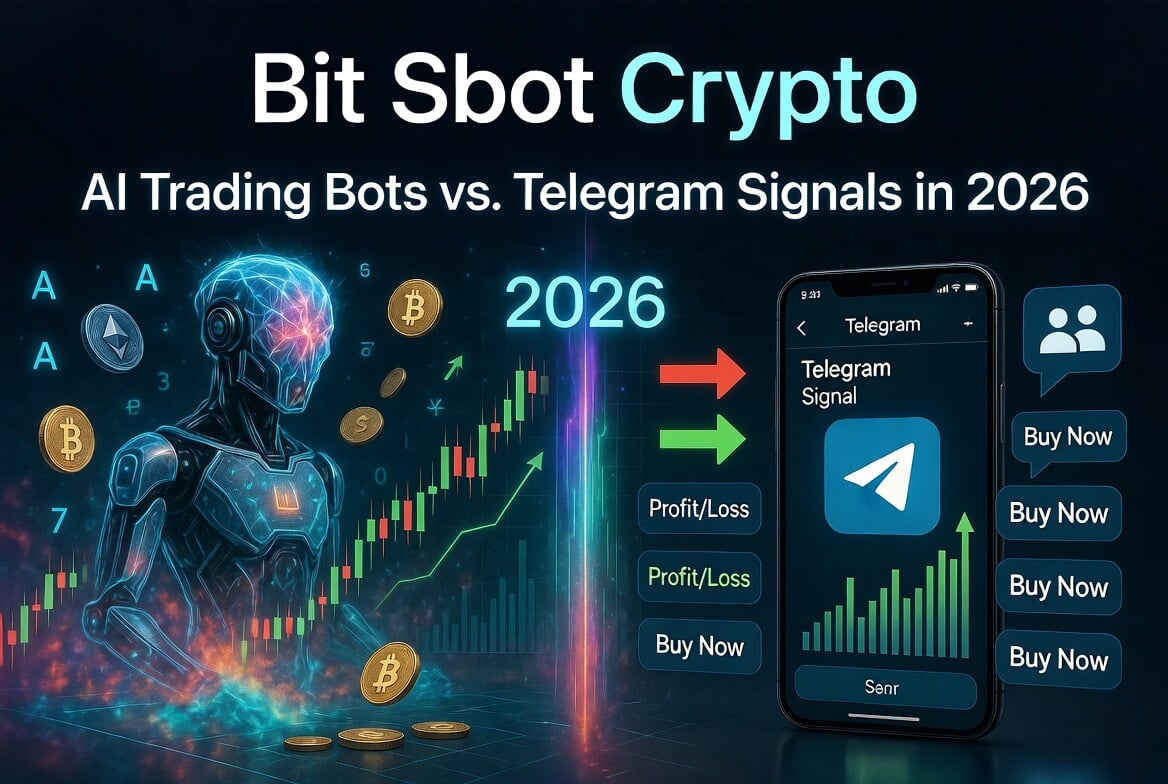
If you’ve landed here searching for “bit sbot crypto,” you’re likely hunting for a reliable, automated way to trade crypto in 2025–2026. This article compares crypto signals telegram groups with AI quant trading bots like SaintQuant, using concrete data from recent market cycles. SaintQuant is an AI-powered crypto quant trading bot platform built around transparency, risk controls, and realistic expectations—no “100% win rate” promises. The goal is to help you decide whether to rely on signal groups, semi-automated tools, or full AI bots rather than blindly chasing the best crypto signals.
What People Mean by “Bit Sbot Crypto” in 2026
The term “bit sbot crypto” typically emerges from misspellings or mashups of “Bitcoin bot” or “Bit bot” searches. Users looking up this phrase are usually seeking automated trading bots, signal-following bots, or occasionally stumbling onto scammy tools promising unrealistic ROIs.
Since late 2023, there has been an explosion of “set-and-forget” Telegram bots combining signals with auto-execution. Many operate without regulation or transparency. A 2025 Chainalysis report found that 68% of such bots showed signs of rug-pull mechanisms via hidden admin withdrawal functions.
Some users mix this term with established bot brands like 3Commas, Pionex, or Bitsgap—platforms that plug into Binance, Bybit, and OKX via API keys. Common search queries from 2024–2026 include “bit sbot crypto Binance,” “bitcoin bot telegram free,” and “sbot crypto signals automated.”
SaintQuant positions itself differently: a dedicated AI quant platform with transparent methodology, not an anonymous “sbot” lurking in a Telegram channel. The distinction matters when you’re connecting API keys to your exchange accounts.
Crypto Signals vs. AI Bots: Core Concepts
Crypto trading signals are timestamped recommendations specifying entry prices, stop-loss thresholds (typically 1–3% below entry), and profit targets at 2–5x risk-reward ratios. In 2024–2026, most cryptocurrency trading signals arrive via Telegram, where channels like Wolf of Trading and Dash 2 Trade built communities exceeding 150,000 members.
AI quant trading bots operate differently. These always-on systems read real-time market data—order books, technical indicators like RSI divergences, Bollinger Band squeezes—and automatically execute trades using pre-defined or machine-learned strategies. SaintQuant, for example, deploys trend following, arbitrage, and volatility breakout systems without requiring human intervention.
The core difference: signals still require human execution and discipline. Bots like SaintQuant execute automatically according to encoded risk rules.
Key comparisons:
-
Execution speed: Bots operate in sub-seconds; human signal traders average 20–60 seconds delay
-
Emotional bias: 40% of manual traders ignore stop-losses per a 2025 eToro study; bots follow rules without exception
-
Required screen time: Signals demand 2–4 hours daily for monitoring; bots require zero
-
Transparency of logic: Premium bot platforms publish auditable strategy logic; signal groups rarely explain methodology
-
Historical backtesting: AI bots like SaintQuant test strategies over 7+ years of data; signals rely on self-reported screenshots
Are Telegram Crypto Signals Still Worth It in 2025–2026?
Telegram became the dominant signal channel between 2017–2024. Groups like Binance Killers, fat pig signals, CryptoNinjas, and jacob crypto bury built massive followings, with channel subscribers growing from 500,000 to over 5 million by 2024.
However, after several manipulation scandals in 2024, traders worldwide grew skeptical. The most notable: on-chain sleuths like ZachXBT exposed a $10 million pump-and-dump scheme in Binance Killers, where admins coordinated 20x leveraged positions on low-cap tokens before dumping. This led to 30–50% subscriber losses across top 50 signal services.
Pros of Telegram signal groups:
-
Real time crypto signals during major events like BlackRock ETF inflows ($1.2 billion net on launch day, March 2024)
-
Interactive communities with detailed analysis using Elliott Wave or Ichimoku Cloud
-
Educational value: 25% of users graduate to independent trading per Dash 2 Trade surveys
-
Some offer free signals or a free tier for evaluation
Cons that active traders face:
-
Inconsistent hit rates dropping to 48% during bear phases (2024 Q4 CoinCodeCap data)
-
Pump schemes affecting 22% of groups per FTC crypto fraud reports
-
Execution delays amplifying slippage to 0.5–2% on volatile pairs
-
Phishing risks via malicious bot links (1.4 million victims in 2024 per Kaspersky)
-
Admin over-reliance exposed during outages like the 2025 Bybit flash crash
If you use signals, treat them as one input among many. Insist on verifiable trade history via Myfxbook-style tracking, on-chain proofs, or exchange API verification—never trust screenshots showing guaranteed profits.
Common Types of Crypto Bots Behind “Bit Sbot Crypto” Searches
Traders searching for “bit sbot” in 2025–2026 typically encounter five bot categories:
DCA Bots systematically buy fixed USD amounts of BTC/ETH at intervals, averaging costs during dips. Pionex user aggregates show 28% annualized returns during 2023–2025 transitions. Ideal for long-term holders who want to buy bitcoin consistently without timing markets.
Grid Bots place buy/sell orders within price ranges (e.g., 5–10% bands around $60,000 BTC), profiting from oscillations in sideways markets. These generated 15–25% APY during ETH’s 2025 summer range but erode during breakouts.
Copy-Trading Bots mirror top performers on platforms like Bybit’s copy features. Elite copiers averaged 35% returns, but 70% of followers underperformed due to execution lag and different position sizing.
Signal-Following Bots like Cornix parse Telegram alerts for auto-execution, integrating with 3Commas to handle 50–100 daily signals. These suffer 10–20% accuracy loss from parsing errors and still depend on external crypto signal provider quality.
Full AI Quant Bots like SaintQuant generate their own signals using multi-factor models before auto-executing. The distinction matters: rather than mirroring external signals, these platforms create endogenous signals backtested over 7+ years with live Sharpe ratios above 1.5.
Many “bit sbot” offerings are thin wrappers around single indicators. SaintQuant combines trend, volatility, order-book signals, and machine learning–based signal modeling for a more robust approach.
Inside an AI Quant Crypto Bot like SaintQuant
SaintQuant’s engine differs from typical black-box sbots through transparent, multi-factor deployment. The platform runs trend-following strategies via SuperTrend indicators tuned on 4H BTC charts, volatility systems using ATR breakouts on altcoins with implied volatility from Deribit options, and arbitrage modules scanning 50+ pairs for 0.2%+ opportunities executable in 100ms.
Backtesting spans 2018–2025 tick data from Kaiko, achieving 45–65% win rates with 1:2.5 risk-reward ratios. Strategies undergo walk-forward optimization and Monte Carlo simulations accounting for 1,000+ slippage scenarios before 90-day paper trading phases.

Core components include:
-
ML signal ranking via XGBoost classifiers scoring 0–100 based on feature importance (volume spikes weighted at 25%)
-
Volatility-adjusted position sizing using Kelly criterion variants (halving exposure above 50% ATR)
-
Risk overlays: 10–20% portfolio drawdown circuit breakers, 5% daily loss caps, correlation filters avoiding >30% exposure to BTC-correlated assets
-
Subscription plans with clear parameters: target ROI ranges (15–50%), risk levels, minimum duration (30/90/180 days)
-
Support for Binance futures, Bybit spot, OKX perps with exportable audit logs
This approach delivers actionable insights through automated trading rather than requiring traders to manually execute on every alert.
Bit Sbot Crypto vs. Manual Signals: Performance & Risk
The real-world experience of relying on manual signal groups versus AI bot execution reveals stark differences in trade outcomes.
Consider a typical scenario from October 2024: during a U.S. CPI release, BTC wicked 5% within 10 seconds. Telegram signals arrived 15–45 seconds post-optimal entry, causing subscribers to chase prices or miss entries entirely. Independent audits by Myfxbook replicas revealed actual signal accuracy closer to 55–65% after accounting for slippage—far below the 85–92% claims from self-reported figures.
Meanwhile, bots like SaintQuant pre-place conditional orders, executing at precise entry and exit points regardless of whether the trader is asleep. One common anecdote: a trader sleeping through a Wolf of Trading take-profit alert missed 15% gains on SOL longs. SaintQuant executed flawlessly 24/7.
Risk dimension comparison:
-
Slippage: Averages 0.8% in signals due to FOMO overrides versus 0.15% in automated rules
-
Leverage discipline: Signal groups often push 10–50x margins; SaintQuant caps at 3–5x
-
Stop-loss execution: 40% of manual traders ignore SLs per eToro studies; bots enforce them automatically
-
April 2025 flash crash: 80% of over-leveraged signal followers were liquidated
No bot or signal delivers a 100% win rate. SaintQuant’s 2024 live stats report 62% hit rate with 18% max drawdown—emphasis on Sharpe ratios above 1.7 and Sortino ratios prioritizing downside protection. Even the best signals cannot match this consistency without human emotional decision making interfering.
How to Evaluate Any “Bit Sbot” or Crypto Signal Provider
Before connecting API keys or paying subscription fees, apply this checklist to any tool in the crypto market:
Verification requirements:
-
Verified track records spanning full market cycles (2021–2025, not cherry-picked bull runs)
-
Transparent strategy descriptions with published logic (e.g., Pine Script code, TradingView integration)
-
Clear risk metrics: Sharpe >1.2, win rate 55%+, profit factor >1.5
-
Independent user reviews on Trustpilot averaging >4.2/5 without paid incentives
-
No guaranteed profits claims (per CFTC guidelines)
Red flags to avoid:
-
Anonymous teams lacking LinkedIn-verified backgrounds
-
Telegram-only presence without a proper website
-
Pressure tactics: “limited spots,” “offer ends in 15 minutes”
-
Requests for seed phrases or withdrawal API permissions
-
Performance claims based solely on screenshots
-
Consecutive losses hidden or deleted from channel history
Testing protocol:
Conduct 30–60 day paper trades with $1,000 virtual allocations. Scale only after correlation analysis matches strategy to your risk tolerance (e.g., <15% drawdown comfort). For accurate crypto signals claims, demand on-chain proofs via Dune Analytics or exchange API verification.
Remember: past performance does not guarantee future results. Always do your own research before committing real capital.

Using AI Bots and Signals Together on a Crypto Trading Platform
A practical hybrid workflow uses signals primarily for market context while letting an AI bot handle entries, exits, and risk management automatically.
Example setup:
A trader follows a reputable Telegram group for BTC macro bias—noting when experienced traders identify major trend shifts based on fundamental analysis like ETF inflows or on-chain metrics. Meanwhile, they deploy a SaintQuant trend strategy that auto-trades BTC/ETH in spot and futures markets using that directional bias plus internal signals generated by machine learning models.
Risk rules for hybrid approach:
-
Per-trade risk capped at 1–2% of capital
-
Leverage limited to 4x maximum
-
Automatic stop-loss placement at 2x ATR
-
Portfolio diversification across 5–10 assets
-
Combine signals from macro sources with bot-generated technical analysis
SaintQuant supports diversified strategy “baskets” blending 40% low-volatility trend following, 30% arbitrage, and 30% breakout systems. This functions more like a managed quant portfolio than a single sbot, targeting 25–40% projected ROI with 12% drawdown.
Onboarding workflow:
-
Create SaintQuant account (2 minutes)
-
Connect exchange APIs with trade-only permissions (5 minutes)
-
Select plan via risk profiler (conservative: 10–20% ROI target)
-
Enable auto-trading and monitor dashboard tracking PnL, trades, and equity curves
SaintQuant vs. Generic “Bit Sbot Crypto” Tools
SaintQuant differentiates from anonymous, generic bots through several key factors that matter to advanced traders seeking quality signals and systematic execution.
Transparency over hype: SaintQuant publishes quarterly backtest updates and maintains open methodology rather than relying on unverifiable Telegram screenshots. The platform provides audit logs exportable to Excel for custom market analysis.
Built-in risk management: Unlike high-risk “degen” groups advertising 20–30 daily signals with 10–20x leverage via Cornix integration, SaintQuant targets 2–5 quality trades daily for steady 1–3% weekly gains. The platform supports position sizing based on volatility rather than fixed lot sizes.
ML evolution: The system retrains on 10,000+ data points daily, adapting to changing market conditions rather than running static strategies that degrade over time.
Support team access: While anonymous channels often go silent during volatile conditions, SaintQuant provides 24/7 support for non-expert users navigating the platform.
High-leverage signal groups suit speculators comfortable with 50%+ drawdowns. SaintQuant’s right group of customers are skeptical, data-driven individuals seeking a systematic, subscription-based service rather than a get-rich-quick scheme.
Risks, Limitations, and What No Bot Can Do
Crypto markets remain highly volatile. Even the best AI quant models experience drawdowns during black-swan events like exchange failures, regulatory shocks, or 2022-style deleveraging when BTC dropped 70%.
Critical limitations:
-
Backtested performance (2018–2025) does not guarantee 2026+ results
-
Users must accept probabilistic outcomes, not fixed promised ROI
-
SaintQuant’s 2024 live stats showed 20–25% drawdowns during peak volatility
Technical risks:
-
Exchange outages: 2–5% API downtimes during peaks (Bybit 2025 outage liquidated 10% of positions)
-
Liquidity gaps on smaller altcoins causing 3–10% slippage in futures markets
-
High-impact news candles invalidating even pre-placed orders
Mitigation strategies:
-
Diversify across 3+ strategies and multiple assets
-
Never allocate more than 20–30% of portfolio to a single bot or approach
-
Maintain realistic expectations aligned with your trading style and risk tolerance
SaintQuant emphasizes clear risk communication over promising institutional investors–level returns without acknowledging the inherent uncertainties in swing trading and shorter-term strategies.
Getting Started with SaintQuant After Using Signal Groups
For traders currently dependent on Telegram signals, here’s a migration path that doesn’t require abandoning familiar tools immediately:
Phase 1: Parallel testing
Start with a small allocation (10% of trading capital) into a SaintQuant starter plan while continuing to observe your usual crypto signals groups. This allows direct comparison without full commitment.
Setup steps:
-
Create SaintQuant account via email with KYC lite verification
-
Connect exchange APIs with trade/read-only permission scopes (verified for security)
-
Select plan aligned with risk tolerance: conservative (15–25% ROI target, 30-day minimum) or moderate (35–50% target, 180-day horizons)
-
Enable real time alerts and dashboard monitoring
Evaluation criteria for 30–90 day period:
-
Win rate comparison (target >58%)
-
Max drawdown behavior (<20%)
-
Sharpe ratio versus your manual PnL over identical periods (e.g., Q1 2025’s 15% BTC rally)
-
How strategy handled sideways versus trending market trends
Log all trades and compare profit targets achieved through manual signal execution versus automated bot performance. This data-driven approach reveals whether paid services or paid signals groups deliver better risk-adjusted returns than systematic AI execution.
Conclusion: Smarter Than “Bit Sbot” Hype
In 2026, the choice isn’t simply “best crypto signals group” versus “magic bot.” It’s about combining robust AI quant tools with informed, skeptical decision-making. Telegram signals can provide ideas, community, and education—but they cannot substitute for systematic risk management and 24/7 automated execution that eliminates emotional overrides.
SaintQuant offers a long-term partnership for data-driven traders seeking consistent, risk-aware trading strategies rather than speculative sbots with unverifiable claims. The platform’s emphasis on backtested methodology, dynamic exposure management, and transparent performance reporting addresses the trust deficit that plagues the broader crypto inner circle of signal services.
Ready to move beyond screenshot-based performance claims? Explore SaintQuant’s lower-risk plans, review published strategy statistics, and test the platform with capital you can afford to risk. The right group for your trading journey prioritizes profitable trades over hype—and that starts with tools built for skeptics, not speculators.