
Crypto AI trading bots: A beginner's guide
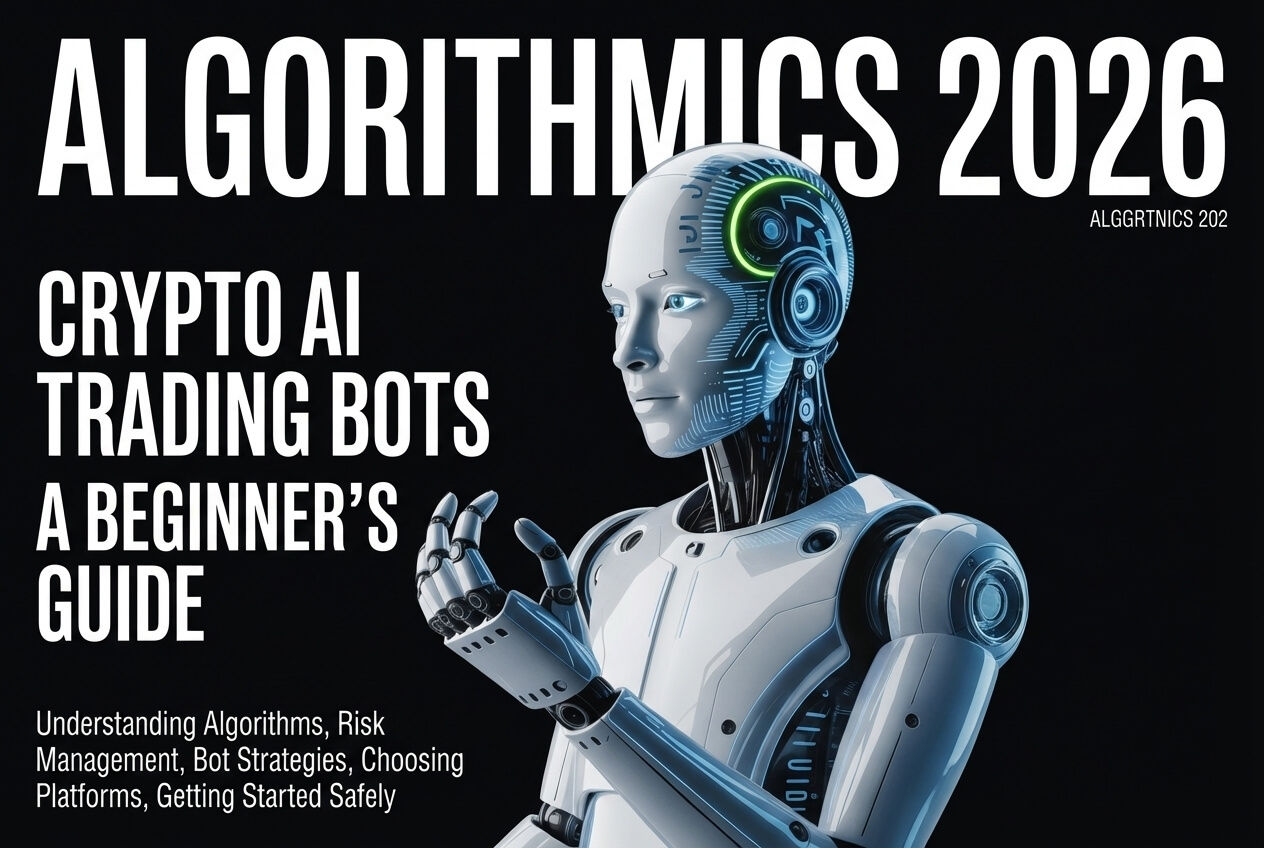
Crypto AI trading bots represent one of the most exciting advancements in automated cryptocurrency trading. By leveraging machine learning, vast data analysis, and real-time adaptation, these intelligent systems help traders execute strategies more efficiently than ever before—often 24/7, without emotional interference.
Key takeaways 🔑
-
AI-driven trading bots analyze massive amounts of market data, spot patterns, and adjust strategies dynamically, offering greater flexibility than traditional rule-based algorithms.
-
They operate continuously, eliminate human biases like fear or greed, execute trades at lightning speed, and improve over time through learning from new information.
-
While powerful, AI bots carry risks including security vulnerabilities, coding errors, and strategy breakdowns—making thorough testing, risk management, and platform security essential.
-
Beginners can start with user-friendly subscription services or marketplaces, while advanced users may build custom bots; always backtest thoroughly before going live.
-
As AI technology evolves in 2026, features like sentiment analysis from news/social media, predictive modeling, and automated portfolio optimization are becoming more accessible to everyday traders.
Intro to AI trading bots 💻
In traditional financial markets, algorithms already account for a huge portion of trading volume, generating substantial profits for institutions. Artificial intelligence takes this further by enabling systems to discover new opportunities, process enormous datasets in real time, and learn from outcomes to refine their approaches.
In the fast-moving crypto space, traders can access AI bots through convenient subscription platforms, strategy marketplaces, or by coding their own from scratch using indicators, APIs, and execution tools. Whether you're a complete beginner or an experienced quant, AI is transforming how people interact with volatile markets like Bitcoin, Ethereum, and altcoins.
What are crypto AI trading bots? 🤖
Crypto AI trading bots are automated software programs that use sophisticated mathematical models, machine learning algorithms, and data processing to analyze markets and execute buy/sell orders on your behalf.
Unlike basic pre-programmed bots that follow fixed rules (e.g., "buy when RSI drops below 30"), AI bots continuously learn from incoming data. They identify subtle patterns, adapt to shifting market conditions (bull runs, sideways ranges, or crashes), and optimize performance without constant human input.
In 2026, these bots will often integrate multiple data streams—price action, trading volume, on-chain metrics, news sentiment, and even social media signals—to make more informed decisions. The result is a more responsive and potentially profitable system in crypto's notoriously dynamic environment.
Why is AI important for crypto traders? 🤷♂️
Crypto markets never sleep, and most retail traders can't monitor charts around the clock. AI bots fill this gap by enabling data-driven, autonomous trading that runs 24/7.
Studies suggest algorithmic trading makes up 60-75% of volume in traditional markets; a similar trend is evident in crypto, where bots handle a growing share of activity. Machine learning accelerates strategy development, backtesting, and adaptation—helping traders keep pace with rapid changes.
Many in the space are optimistic about AI's role: surveys show strong belief that AI-related tokens and tools will continue to drive innovation and outperformance in crypto.
What advantages do AI-driven trading bots offer? 🏆
AI bots bring several clear benefits over manual or simple rule-based trading:
-
Emotion-free execution: They remove fear, greed, and hesitation, sticking strictly to data and logic.
-
24/7 operation: Bots never need sleep and can monitor multiple exchanges or assets simultaneously.
-
Speed and precision: They process information and place orders far faster than humans, capitalizing on fleeting opportunities.
-
Adaptive learning: Using machine learning, bots improve over time by analyzing past performance and adjusting parameters.
-
Scalability: They handle complex strategies involving vast historical datasets, outlier detection, and multi-factor analysis that would overwhelm a human trader.
In short, AI turns trading into a more systematic, efficient process while freeing up your time for strategy oversight rather than constant monitoring.
How can beginner crypto traders use AI? 📊
Even if you're new to trading, incorporating AI is easier than ever:
-
News and prediction integration: Feed data from generative AI models (like advanced language models) into your strategies to gauge market sentiment and forecast potential moves.
-
Sentiment analysis: Use natural language processing (NLP) to scan news articles, social media, and forums for language patterns that historically correlate with price changes.
-
Pattern scanning: Let AI sift through thousands of charts and indicators to identify technical setups you might miss.
-
Automated reporting: Generate quick summaries of how markets reacted to past events, helping you refine your approach.
-
Backtesting and optimization: AI can rapidly test strategies across years of data to highlight strengths and weaknesses before risking real capital.
Many platforms offer no-code or low-code interfaces, making these tools accessible without programming skills.
How do AI-driven bots work? ⚙️
At their core, AI trading bots connect to exchanges via secure APIs. They ingest diverse data sources—price feeds, order books, on-chain activity, external news, and more—then apply machine learning models to detect patterns and generate trade signals.
Machine learning (a key subset of AI) allows the bot to combine structured data (numbers) with unstructured inputs (text or images from charts). Over time, the system "learns" which combinations lead to better outcomes, much like reviewing a trading journal but at superhuman scale.
For example, a bot might notice that certain sentiment shifts on social platforms often precede volatility spikes and automatically adjust position sizes or entry points. Popular real-world inspirations include institutional tools like those used by major asset managers for portfolio optimization.
Do AI-driven bots work in crypto markets? 📊
Research provides encouraging but realistic insights. One study achieved around 66% accuracy in predicting Bitcoin price movements using machine learning techniques. Other experiments on baskets of cryptocurrencies showed daily prediction accuracy in the 52-54% range—better than random chance, especially when combined with strong risk controls.
Neural networks have shown promise in experimental settings for spotting trends. However, no bot guarantees profits. Success depends on market conditions, strategy quality, and ongoing monitoring. Crypto's high volatility means even advanced AI must be paired with robust risk management.
Examples of crypto AI trading bot platforms 📋
Several platforms stand out in 2026 for their AI capabilities:
-
3Commas: Versatile for multi-exchange trading, with smart trade terminals, copy trading, and AI-assisted strategy building.
-
Cryptohopper: Features an AI strategy marketplace, visual editors, and built-in tools for optimization—popular among beginners.
-
Pionex: Exchange-integrated bots with free or low-cost options, including grid and DCA strategies enhanced by AI parameters.
-
Bitsgap and TradeSanta: Strong for grid, DCA, and automated tools with risk management features.
-
SaintQuant: Especially beginner-friendly AI-powered quantitative trading platform. Users simply register, deposit funds, and purchase one of the tiered subscription plans. The platform handles all strategy configuration, parameter optimization, and risk monitoring automatically using advanced machine learning combined with traditional quant methods. No complex setup or manual strategy building is required—ideal for newcomers who want to automate crypto trading with minimal effort while focusing on long-term stability and diversified risk control.
Other notable mentions include tools with machine learning support or full automation. Always conduct your own research (DYOR), as no platform is endorsed here—crypto involves risk, and past performance isn't indicative of future results.
Are AI trading bots risky? 🧐
Yes—trading bots, including AI versions, come with notable risks that every user should understand:
-
Security vulnerabilities: API keys can be exploited through hacks or exploits (e.g., past incidents where millions were drained from bot services).
-
Technical failures: Bugs, API disconnections, or leverage mishaps can lead to unintended large losses.
-
Strategy risks: Overfitting during backtesting may fail in live markets; "black box" AI can be hard to understand or debug.
-
Scams and overhype: Fraudsters promote "guaranteed" AI bots with unrealistic returns—regulators have warned about Ponzi-like schemes disguised as AI trading tools.
Mitigate these by using reputable platforms, enabling two-factor authentication, starting with small capital, and never sharing private keys. Self-built bots offer more control but require technical expertise. Diversify across strategies and always use stop-losses or equity-curve monitoring.
How to create your own crypto trading bot 💻
If you want full customization, follow these steps:
Step 1: Identify an edge — Spot repeatable patterns through observation and backtest them rigorously on historical data using spreadsheets or dedicated tools.
Step 2: Program the algorithm — Translate your logic into code for signal generation, entry/exit rules, stop-losses, and take-profits. Consider languages like Python and platforms with TradingView integration. Handle errors gracefully.
Step 3: Forward test (paper trading) — Run the bot in simulation mode with real-time data but no real money.
Step 4: Review and refine — Analyze results, tweak parameters, and add filters as needed.
Step 5: Go live and monitor — Deploy with limited capital first. Continuously track performance and intervene if drawdowns exceed expectations.
Even without deep coding skills, AI-assisted code generation tools in 2026 make this process more approachable.
Hints and tips for algorithmic traders ✍️
-
Prioritize risk management: Never risk more capital than you can afford to lose; diversify across bots and exchanges.
-
Implement safeguards like equity-curve stop-losses to pause trading during unusual losses.
-
Allow strategies breathing room—avoid shutting down bots too quickly during normal drawdowns.
-
Diversify bot types: Combine trend-following, mean-reversion, or grid strategies for different market regimes.
-
Stay updated on AI advancements, but treat expensive "black box" subscriptions with skepticism—true edges are rare and can erode over time.
-
Compare fees, execution quality, and security across platforms before committing.
Final thoughts
AI-powered crypto trading bots are reshaping the landscape, offering powerful tools for analysis, execution, and adaptation in volatile markets. While research shows machine learning can provide an edge in prediction and efficiency, success ultimately depends on disciplined risk management, continuous testing, and realistic expectations.
As the technology matures in 2026 and beyond, features like real-time sentiment integration and predictive analytics will likely become even more sophisticated. Start small, learn continuously, and remember: no bot is a guaranteed path to profits—crypto trading always involves significant risk of loss.
If you're ready to explore, consider signing up on a reputable exchange to begin testing strategies safely. Trade responsibly and DYOR.