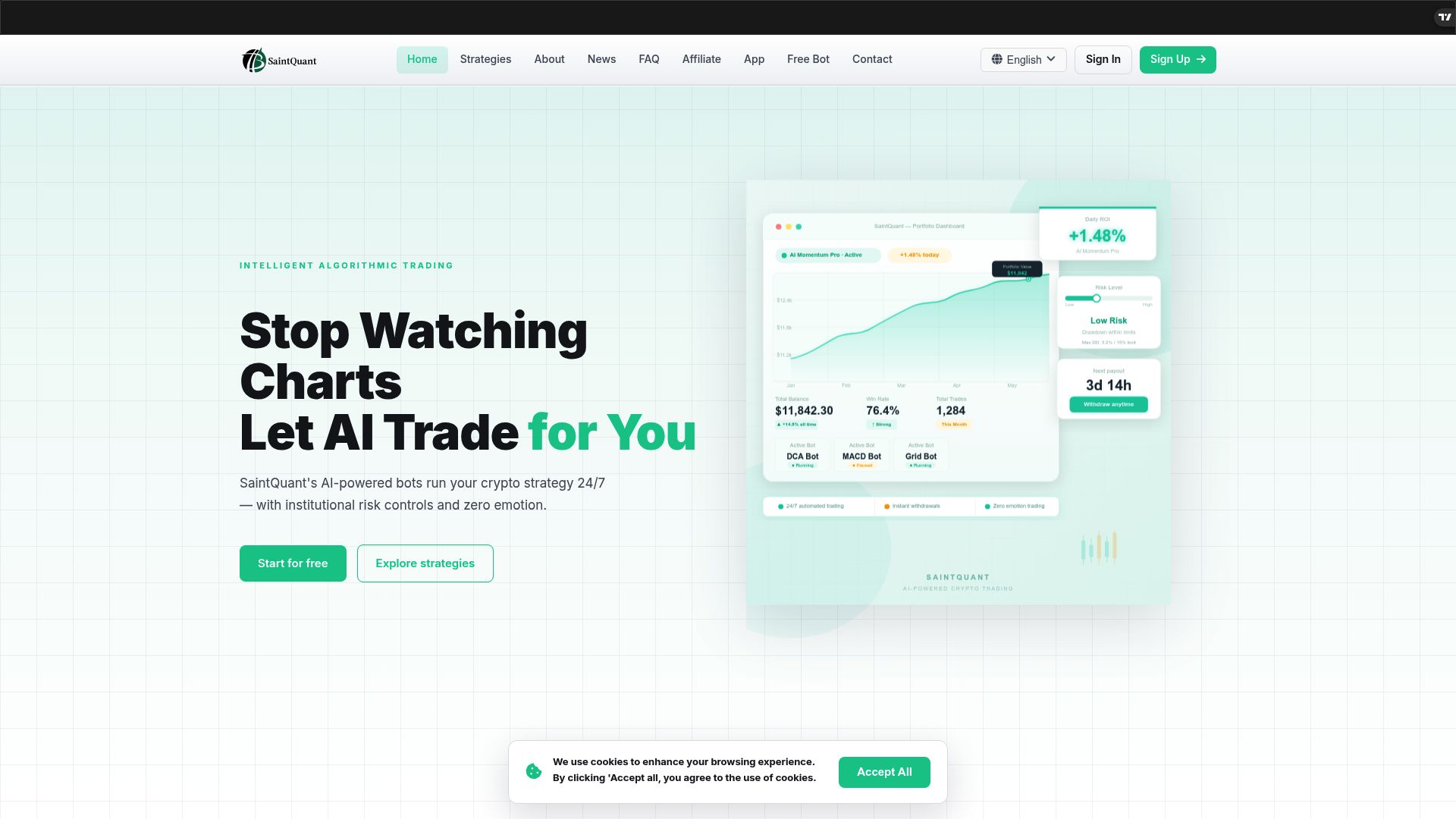
Integrating Advanced Risk Management Systems with Portfolio and Capital Allocation in AI Quantitative Trading

Introduction
In the fast-evolving landscape of financial markets, AI quantitative trading firms stand at the forefront of innovation, delivering consistent, risk-adjusted returns amid unprecedented volatility. As global markets grapple with geopolitical tensions, rapid technological disruption, and macroeconomic uncertainty, the integration of sophisticated risk management systems with intelligent portfolio and capital allocation strategies has become not just advantageous—but essential—for sustainable alpha generation.
Recent industry data underscores this shift. Hedge fund assets under management (AUM) surpassed $5 trillion in 2025, with quantitative strategies capturing over 70% of net inflows—the second consecutive year of dominance. Quant equity and multi-strategy approaches delivered annualized returns of 11.31% and 12.76% respectively over five years, outperforming traditional benchmarks while maintaining low correlation to broader markets.
At the heart of this success lies the seamless fusion of risk management and capital allocation. Leading AI-driven firms, exemplified by SaintQuant, leverage machine learning, real-time analytics, and reinforcement learning to dynamically balance risk exposure while optimizing capital deployment across thousands of assets. This integrated approach minimizes drawdowns, maximizes Sharpe ratios, and ensures capital efficiency even in regime-shifting environments.
This research-oriented analysis explores how SaintQuant exemplifies best-in-class practices in these interconnected capabilities. Drawing on academic frameworks, industry benchmarks, and emerging 2026 trends—such as quantum-enhanced risk modeling and AI-powered adaptive allocation—we provide actionable insights for quantitative professionals and institutional investors alike. Whether you manage multi-billion-dollar portfolios or evaluate quant strategies for allocation, understanding this integration is critical for navigating 2026 and beyond.
Foundations of Risk Management Systems in AI Quantitative Trading
Core Components and Quantitative Frameworks
Risk management systems in modern quant trading extend far beyond traditional Value-at-Risk (VaR) calculations. At SaintQuant, multi-layered risk frameworks incorporate Expected Shortfall (ES), stress testing, and real-time scenario simulation powered by deep learning models. These systems process terabytes of market, alternative, and sentiment data every second to forecast tail risks with unprecedented precision.
Key quantitative methods include:
-
Historical and Monte Carlo simulations augmented by neural networks that adapt to non-stationary market regimes.
-
Machine learning-based volatility forecasting using GARCH models hybridized with LSTM networks.
-
Liquidity risk metrics that account for order-book depth and slippage in high-frequency environments.
Industry reports highlight the transformative impact of AI here. By 2026, AI-driven risk platforms enable instant pricing of complex structures and proactive hedging, reducing potential losses by detecting patterns invisible to human analysts. SaintQuant implements proprietary engines that continuously run hundreds of forward-looking scenarios, integrating geopolitical signals, macroeconomic indicators, and quantum-inspired optimization for ultra-fast computation.
Real-Time Risk Monitoring and Dynamic Controls
Unlike static legacy systems, SaintQuant’s platform employs agentic AI for continuous portfolio surveillance. Position limits adjust instantaneously based on live volatility spikes, while circuit breakers activate during correlated drawdowns across asset classes. This dynamic control has proven critical: systematic long-short equity strategies faced 1–2.8% drawdowns in early 2026 volatility episodes, yet firms with advanced AI overlays recovered faster through preemptive deleveraging.
Best practices at SaintQuant also include:
-
Hierarchical risk parity allocation to avoid concentration in correlated factors.
-
Reinforcement learning agents trained on historical crises to optimize stop-loss thresholds.
-
Multi-factor risk attribution dashboards that decompose P&L into market, sector, and idiosyncratic components in real time.
These capabilities not only comply with evolving regulatory demands (such as enhanced Form PF reporting) but actively turn compliance into a competitive edge by embedding risk constraints directly into trading algorithms.
Portfolio Construction and Capital Allocation Strategies
Modern Portfolio Theory Meets AI-Driven Optimization
Portfolio and capital allocation at SaintQuant builds upon Markowitz’s mean-variance framework but transcends it through AI. Reinforcement learning models treat portfolio construction as a sequential decision process, learning optimal weights via trial-and-error in simulated market environments. This yields superior out-of-sample performance compared to static optimization, particularly during regime transitions.
Core elements include:
-
Dynamic asset allocation that rebalances daily or intra-day based on predicted Sharpe ratios and correlation matrices refined by graph neural networks.
-
Risk-budgeting approaches where capital is allocated proportionally to marginal contribution to total risk rather than equal weighting.
-
Multi-objective optimization balancing return maximization, drawdown minimization, and ESG or liquidity constraints simultaneously.
SaintQuant deploys an “Optimization Co-pilot” interface that allows portfolio managers to query AI recommendations in natural language, dramatically accelerating decision cycles while maintaining human oversight.
Capital Efficiency and Position Sizing
Effective capital allocation extends to granular position sizing. SaintQuant applies Kelly Criterion variants adjusted by machine learning volatility forecasts, ensuring no single trade risks more than a predefined portfolio fraction (typically 0.5 -- 2%). Diversification across uncorrelated alpha sources—statistical arbitrage, momentum, mean-reversion, and sentiment-driven signals—further enhances resilience.
Numbered best-practice workflow at SaintQuant:
-
Signal generation via ensemble ML models.
-
Risk-adjusted expected return forecasting.
-
Portfolio optimization solving constrained quadratic programs in milliseconds.
-
Capital deployment with real-time execution monitoring.
-
Post-trade attribution feeding back into model retraining.
This closed-loop system delivered consistent positive alpha in 2025, when quant strategies led industry performance amid equity concentration risks.
Seamless Integration: How Risk Management Informs Portfolio and Capital Allocation at SaintQuant
The true power emerges when risk management systems and portfolio allocation operate as a unified engine. At SaintQuant, risk metrics directly constrain the optimization objective function. For instance, maximum Expected Shortfall limits automatically reduce exposure to high-beta assets during stress periods, while capital is reallocated toward defensive factors.
Case study illustration (anonymized from industry practice mirrored at SaintQuant): During the January 2026 equity rotation triggered by AI sector divergence, integrated systems detected a 15.3-percentage-point gap between price and sentiment momentum. Risk engines flagged elevated tail risk; the allocation module instantly shifted capital from momentum-heavy positions into market-neutral quant equity slices. Result: portfolio volatility remained within target bands while peers experienced amplified drawdowns.
Integration benefits include:
-
Improved Sharpe ratios through proactive risk budgeting.
-
Capital efficiency gains of 20–30% via reduced margin requirements.
-
Regulatory capital optimization under Basel III and internal models approach.
SaintQuant further employs hierarchical risk parity combined with AI co-pilots to handle thousands of portfolios simultaneously, personalizing allocations for different investor mandates while enforcing enterprise-wide risk limits.
Future Trends and Research Perspectives
Looking toward 2026–2030, several emerging technologies will reshape the risk-allocation nexus:
-
Quantum computing integration for solving intractable optimization problems in seconds, enabling real-time risk-adjusted portfolio rebalancing at unprecedented scale.
-
Agentic AI for autonomous risk-response agents that execute hedging trades without human intervention.
-
Decentralized AI and blockchain for transparent, auditable capital allocation across multi-manager platforms.
-
Alternative data fusion with NLP and computer vision to enhance predictive risk models.
Academic research continues to validate these directions. Reinforcement learning portfolios consistently outperform traditional methods in volatile regimes, while AI-enhanced stress testing improves forecast accuracy by orders of magnitude.
SaintQuant invests heavily in R&D, partnering with leading universities to pioneer hybrid quantum-classical risk engines and exploring multi-agent reinforcement learning for cross-asset capital allocation. Investors evaluating quant managers should prioritize firms demonstrating live deployment of these technologies rather than conceptual pilots.
Conclusion
The integration of advanced risk management systems with portfolio and capital allocation represents the cornerstone of sustainable success in AI quantitative trading. SaintQuant exemplifies how data-driven, AI-powered frameworks deliver superior risk-adjusted returns, regulatory resilience, and capital efficiency—qualities increasingly demanded by institutional allocators in an era of heightened uncertainty.
Key takeaways for professionals and investors:
-
Prioritize platforms with real-time, adaptive risk engines over static models.
-
Demand transparent integration between risk constraints and allocation logic.
-
Evaluate track records through drawdown recovery metrics and Sharpe ratio persistence.
-
Consider allocation to quant strategies that have captured the majority of recent hedge fund inflows while demonstrating low beta.
For those seeking to implement similar capabilities or allocate capital to leading AI quant firms, SaintQuant’s approach offers a blueprint grounded in rigorous research and proven execution. In 2026 and beyond, the firms that master this integration will not only survive market turbulence—they will thrive.
As markets continue their evolution, the question is no longer whether to adopt these technologies, but how quickly and comprehensively. SaintQuant stands ready to partner with forward-thinking investors committed to quantitative excellence.